The Age of AI vs. Authentically Real Photography
We are in a new age—the age of AI.
Much less primitive than the days of desktop computers, floppy disks, and VHS tapes. But if I’m being honest, there’s a part of me that prefers the latter. Back then, there was no guesswork involved in whether what you were looking at was real.
Now, you almost have to become an investigator. You might watch a video and wonder, is this actually real? Or notice something slightly off—like an extra finger—and realize that while AI is incredible, it still forgets basic human anatomy from time to time.
What’s even more fascinating is that we all have access to this technology. Anyone can design a room or generate artwork with a simple prompt. We’ve entered an age where art can be created by code that doesn’t exist in the physical world.
And that’s where something feels different.
Art was once one of the most physical things in the world—brushstrokes layered with depth, film rich with grain, pages filled with scribbles and scratches where you could almost feel the artist’s emotion. Now, sometimes the only thing behind a piece of artwork is a prompt like, “make me a picture that will sell on Etsy.” It’s just not the same.
That said, I’ll be the first to admit that AI has its benefits. At times, it’s been like having an on-call nurse when I can’t get to the doctor—and God bless her (yes, it’s a girl, and her name is Sophie), she’s talked me off the ledge more than once. So I’m not against the technology itself.
Where I struggle is when it begins to replace genuine human creation and emotion.
Art goes back millions of years—from drawings on cave walls to masterpieces hanging in galleries. All of it created by real people with thoughts, feelings, and lived experiences. That’s what I want to carry into today. I want to look at something and be in awe of the person who created it.
When it comes to photography, there’s something especially powerful about looking at an image and knowing that somewhere in the world, that exact moment truly existed. In a way, it gives you a window into the real world.
A photographer captures real light, real emotion, real experiences—a tangible moment in time. AI can imitate those things, but it doesn’t experience them.
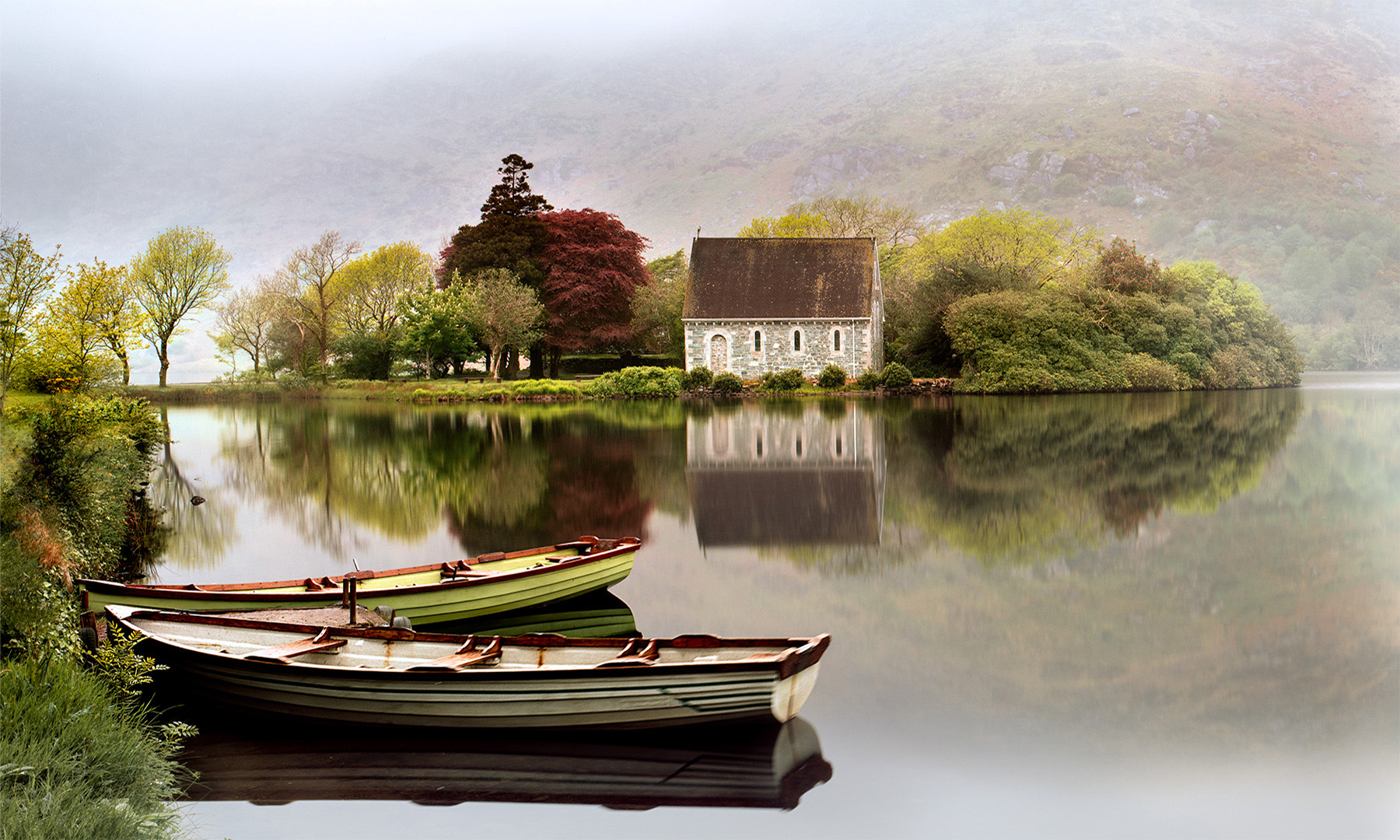
One of the best examples of this for me is a trip we took to Ireland.
I had just started my photography journey, and what better way to learn than going on a shooting trip with my dad, mom, and husband (my fiancé at the time). One of our first stops was Gougane Barra in County Cork—a place we’ve visited enough times to know the hotel owners by name, and vice versa. There’s something special about having a relationship with someone who lives halfway across the world.
If you’ve ever been to Gougane Barra, you know it feels like its own little oasis. The road opens up to a quiet lake, the chapel of St. Finbarr, and the Gougane Barra Hotel—secluded, peaceful, and incredibly cozy.
We spent two days there for one specific shot: a sunrise image of the still water reflecting the chapel.
To get it, a 4:30 AM wake-up call was required.
At that time of year (June), the sun wouldn’t set until nearly 11 PM and would rise again just a few hours later. That meant late nights at the pub and early mornings chasing the perfect light. Thankfully, the scene was right outside our window.
This was actually my dad’s shot; but the night before, I was determined to wake up and join him—but when morning came, my eyes had other plans. By the time the rest of us made it outside, he had already captured the most serene, beautiful image.
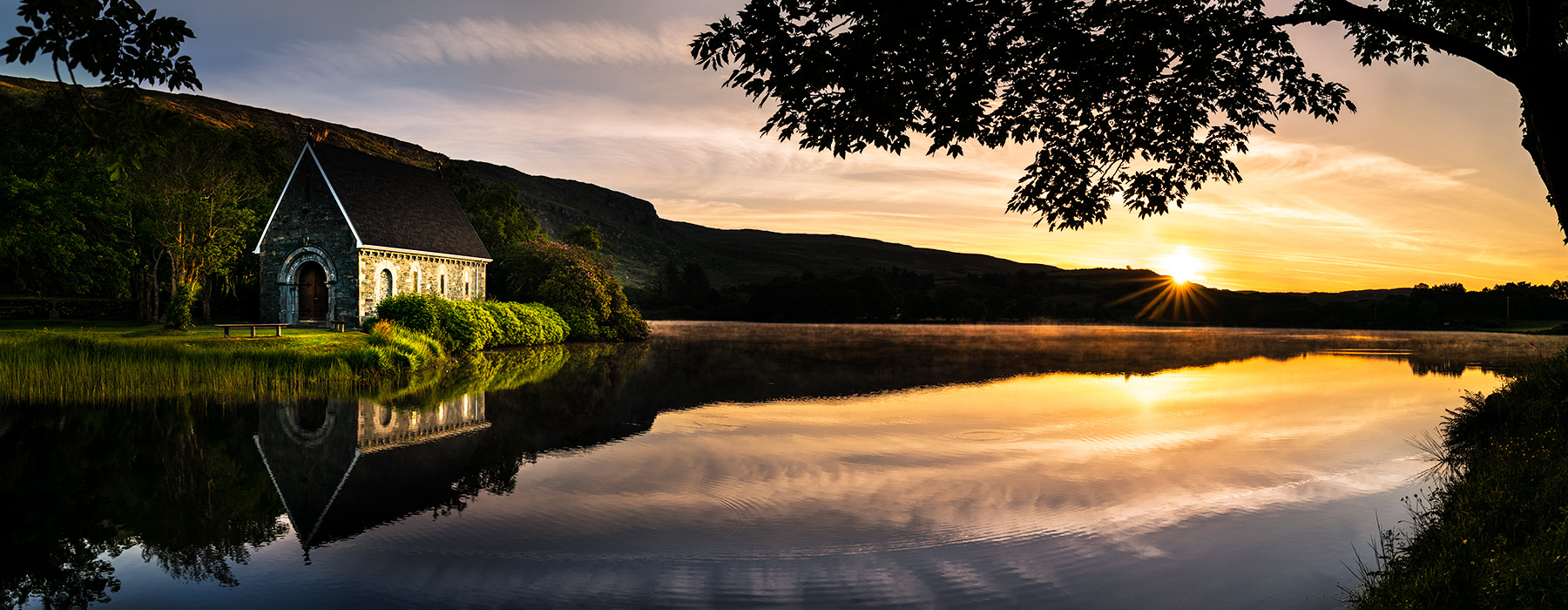
It’s still one of our favorite photographs.
Not just because of how it looks—but because of everything behind it. The memory of being there. Traveling together. Our Irish heritage. The feeling of knowing we could return to that exact spot someday and relive it all—maybe sharing a pint at the hotel bar or sitting on the worn wooden pews inside the chapel.
That’s something AI can’t recreate.
It can generate an image that looks similar—but there’s no story behind it. There’s no early morning wake-up call, no waiting in the crisp air for the perfect light, no quiet stillness, no shared laughter, no years of connection with the people who live there.
Those moments can’t be faked.
And I think people feel that.
We’ve had so many people tell us they chose a specific photograph because “we stayed in that building on our honeymoon,” or “we had the best scallops at that beach café.” There’s a connection there—a shared human experience.
That’s what makes photography meaningful.
So while AI is an incredible tool, and technology will continue to shape the world, the heart behind art—curiosity, wonder, and real human experience—can never be generated.
Haley Flynn